Table of contents
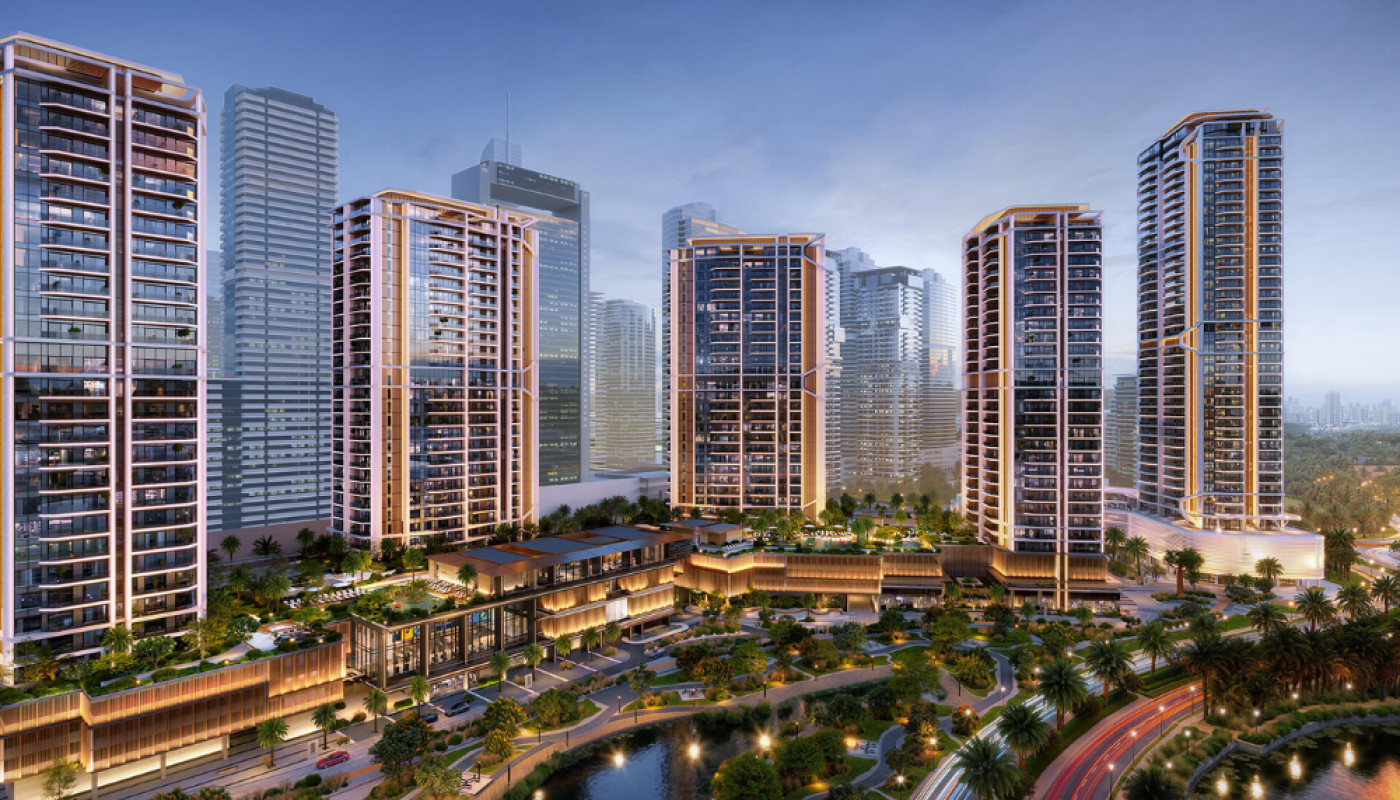
Inside the private offices of Dubai’s brokerage circuit, certain projects circulate as conversation. Others circulate as urgency. The new Ellington release at Jumeirah Islands has, within a matter of weeks, slipped from the first category into the second. Towers one and two have entered Expression of Interest registration. Towers three and four remain unreleased, with no published timeline. Brokers consulted by Property Finder describe a market dynamic that has not been seen on this scale since the Bulgari Lighthouse and One Za’abeel launches.
A Launch Defined by Velocity
The pace of pre-release interest in Eltiera Views has, by all accounts, surprised even the brokerage networks accustomed to Ellington launches. Bayut’s broader market commentary has noted that the post-2024 Dubai market has developed a clear pattern in which projects with constrained supply, recognisable developers, and credible payment plans absorb their initial release in days rather than weeks.
What distinguishes the Eltiera Views launch is not merely the velocity but the breadth of the demand. Inquiries have, according to multiple brokerage sources, included end-users seeking a primary residence, investors targeting yield, Golden Visa applicants seeking the AED 2 million qualifying threshold, and overseas buyers placing the project alongside their European and Asian holdings. The diversity of demand is, in market terms, a stronger signal than its volume.
Understanding the EOI Phase
Expression of Interest, in the Dubai off-plan market, has evolved from a marketing formality into a structured filtering mechanism. Buyers register interest before formal unit allocation, often accompanied by a refundable deposit, and the developer uses the resulting list to manage allocation in a controlled sequence.
Property Finder’s market commentary has, in recent years, described the EOI phase as the moment at which a project’s commercial trajectory becomes legible. A thin EOI list typically precedes a soft launch. A deep EOI list, with broker channels reporting persistent inbound demand, typically precedes a tight release window in which only a fraction of the registered interest is converted into signed contracts.
The EOI phase for towers one and two of the four interconnected towers at Jumeirah Islands has, by all available accounts, fallen firmly into the second category. The pattern has been observed before, most recently with Bulgari Lighthouse and IL Primo, both of which absorbed their initial releases in days, leaving the secondary market to price the resulting scarcity.
Towers Three and Four: The Unreleased Question
The decision to hold towers three and four back from the initial EOI cycle has, in itself, generated significant commentary. The phasing strategy serves several purposes. It allows the developer to gauge the price elasticity of the first two towers before exposing the remaining inventory. It permits design and specification refinements based on the first-phase reception. And it creates the kind of supply tension that, in past comparable launches, has supported pricing on the second-phase release.
For brokers managing client expectations, the unreleased status of towers three and four functions as both an opportunity and a constraint. Clients who do not secure a position in the initial release have to commit to waiting, sometimes through unpredictable timing windows, for the second-phase opening. Some brokers have observed that this dynamic itself has accelerated EOI registrations for the first two towers, with buyers preferring early commitment to the uncertainty of waiting.
A Precedent for Phased Releases
Phased releases are not new in Dubai. One Za’abeel deployed a phased structure across its two towers, with the second tower opening at materially different price points from the first. IL Primo on the Opera District released its inventory in measured tranches, with each tranche pricing in the absorption of the prior one. Bulgari Lighthouse, on Jumeirah Bay Island, used a more compact phasing strategy with similar pricing implications.
In each comparable case, the second-phase release commanded a meaningful premium over the first-phase pricing. Whether the same pattern holds for the second phase of Ellington’s Jumeirah Islands project will be one of the more closely watched data points in the Dubai 2026 launch calendar.
Broker Exclusives and Allocation Dynamics
Behind the public marketing layer, the project’s allocation dynamics are being managed through a controlled set of brokerage relationships. Industry sources cited by dxboffplan and Property Finder have noted that the allocation model favours brokerages with documented histories of placing high-conviction buyers in prior Ellington schemes.
This is not unusual at this end of the market. Major Dubai launches have, for some time, operated through tiered broker access, with the most active and credible brokerages receiving priority allocation slots in exchange for client-quality commitments. The model is designed to filter speculative interest out of the early absorption phase and to preserve a more stable buyer base for the project’s long-term pricing.
For buyers, this means that the path into the project is, in practice, through a relatively small number of brokerage firms. Direct buyer-to-developer channels exist, but the bulk of the allocation flow runs through the established brokerage network. That structure is itself part of what is driving the “everyone is talking about it” effect, because the limited access channels concentrate the conversation.
Comparable Hyper-Launches
To understand the current market posture toward Eltiera Views, it is useful to situate the project alongside the comparable hyper-launches of recent Dubai cycles.
Bulgari Lighthouse
The Bulgari Lighthouse release on Jumeirah Bay Island, structured around an ultra-prime price band, demonstrated the market’s appetite for branded residential at scarcity-constrained addresses. Inventory was absorbed within a compact window, and secondary market activity priced the resulting scarcity at materially elevated levels.
One Za’abeel
One Za’abeel, the Ithra Dubai project anchoring the One Za’abeel district, deployed a two-tower phased release that became a reference point for the Dubai market’s appetite for vertical luxury at the city’s central spine. Each phase absorbed its inventory quickly, with notable secondary market activity in the months following each release.
IL Primo
IL Primo, on the Opera District near Burj Khalifa, structured its release around layered tranches that paced absorption while preserving pricing flexibility. The project’s commercial performance has been frequently cited in industry commentary as a benchmark for measured high-end launches.
Eltiera Views sits in a different price band from these reference points. It is not an ultra-prime branded launch, and it does not occupy a central-spine address. But its absorption velocity, in terms of EOI depth and broker-channel activity, has been comparable in pattern if not in price band. The market is treating the project, in effect, as a hyper-launch at the upper-mid level, a category that has been relatively rare in Dubai’s recent history.
Why the Velocity Is Structural
Several structural factors explain why the velocity is happening on this scale.
The first is location. Jumeirah Islands has, for two decades, hosted no meaningful new development. The community has been a closed loop in supply terms, and the introduction of apartment product at the lakeside addresses a long-standing structural undersupply.
The second is the developer. Ellington’s prior launches have consistently absorbed quickly, and the buyer base built across Belgravia, The Crestmark, Ocean House, and Eltiera Heights has developed into a repeat-buyer pool that returns for each subsequent release.
The third is the payment plan. The 70/30 construction-linked structure, with 20 percent at booking, 50 percent across nine milestones, and 30 percent at handover in Q4 2029, has been read by buyers as developer-aligned and conviction-friendly. The structure filters out short-cycle speculators and supports stable pricing through the construction window.
The fourth is the Golden Visa threshold. The AED 2 million qualifying threshold for Dubai’s ten-year Golden Visa aligns precisely with the project’s one-bedroom price band starting at AED 2.1 million. Henley & Partners has, in its periodic commentary on residency-by-investment programmes, identified the Dubai Golden Visa as one of the most actively used pathways in the current global mobility cycle. The alignment between the project’s entry price and the visa threshold is, in market terms, deliberate and effective.
The Property Finder Velocity Signal
Property Finder’s market data, while not always publicly granular at the launch level, has historically shown that projects with deep early interest produce elevated search volume and persistent inbound inquiry across multiple weeks. The pattern for Eltiera Views, based on commentary from brokers and aggregator analysts, has matched this signature.
Search volume for the project name has, by all reports, remained elevated since the EOI phase opened. Inquiry volume across the major aggregators has held at levels consistent with the most active launches in the Property Finder data set. The cumulative effect is a level of market visibility that is unusual for a project at this price band, and it is part of why the buzz around Ellington’s latest design-led address has spread beyond the brokerage circuit and into broader market commentary.
Conviction Versus Speculation
A persistent theme in market commentary on the project has been the distinction between conviction-driven demand and speculation-driven demand. JLL’s broader UAE market notes have, in recent years, emphasised that the Dubai market in 2025 and 2026 has skewed materially toward conviction buyers, with speculative flippers occupying a smaller share of activity than in prior cycles.
The payment plan structure at Eltiera Views, with its substantial handover tranche, reinforces this skew. Buyers committing to the project are committing to a multi-year construction window with capital exposure that does not lend itself easily to short-cycle resale. The buyer profile, accordingly, has been weighted toward end-users and long-cycle investors rather than toward short-cycle speculators.
That distinction is part of why the project is being discussed in qualitative terms across the brokerage network. The conversation is not simply about absorption velocity. It is about who is absorbing, on what terms, and with what expected hold period. The answers, in the case of this launch, point toward a market segment with structural depth.
The Conversation Will Continue
A launch becomes a market conversation when its absorption pattern, its location, and its developer combine to produce something unusual. The current Dubai cycle, while rich in new product, has produced relatively few launches that meet all three conditions at once. Eltiera Views, by the evidence of its EOI phase, broker dynamics, and search volume, appears to be one of the few that does.
Towers one and two are absorbing. Towers three and four remain a known unknown. The brokerage circuit is, in the meantime, working through its allocation lists. The conversation will, by all indications, continue through the second half of 2026, and the question of how the second phase prices, when it eventually opens, will be one of the more telling data points in the Dubai market for the year.
On the same subject

Climate Change ROI: Green Investments that Pay Off

Behind the Veil of Dark Pools: The Secret Stock Market

NFTs Unleashed: The Art Market's Billion-Dollar Revolution

Ditch the Bank: Exploring the World of Decentralized Finance

Unboxing the Crypto Craze: More Than Digital Gold?

Millennial Millionaires: Secrets of the Young and Wealthy

Impact of Climate Change on Global Stock Markets

Fintech Disruption: How Technology is Changing Money

Investing in Artistic Ventures: The New Goldmine?
